
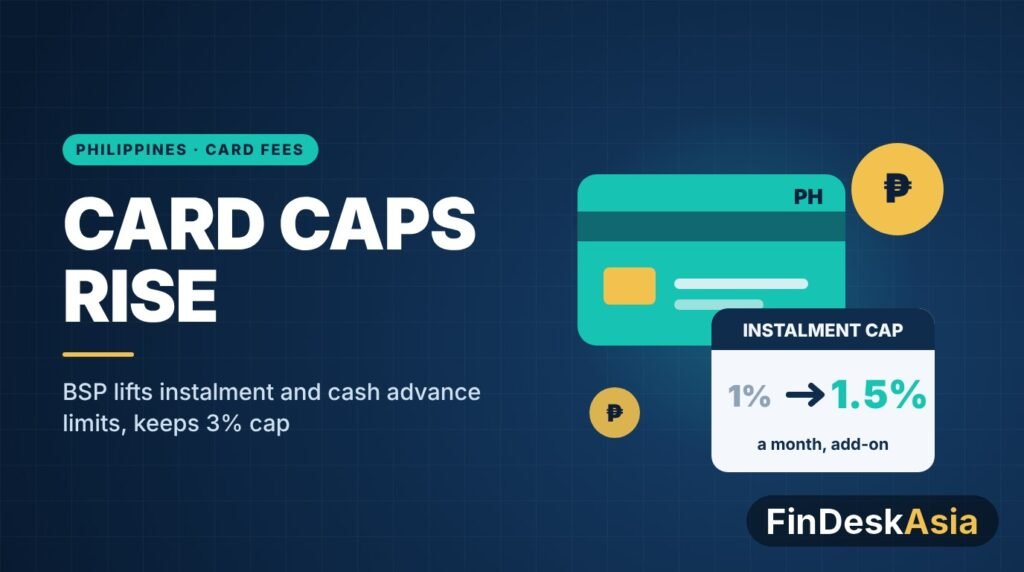
Philippines: BSP Raises Card Instalment Cap to 1.5% a Month, Keeps 3% Interest Ceiling
Credit card users in the Philippines will soon pay more, at most, when they split a purchase into monthly instalments or draw cash from their card. The Bangko Sentral ng Pilipinas (BSP), the country’s central bank, has raised two of the fee ceilings it set during the pandemic, while leaving the main 3% monthly cap on card interest untouched.
Key facts
- The BSP issued Circular No. 1242 on 10 November 2026.
- The maximum monthly add-on rate on credit card instalment loans rises to 1.5% from 1%.
- The one-time processing fee cap on each cash advance rises to ₱300 from ₱200 (Philippine pesos).
- The ceiling on finance charges for unpaid card balances stays at 3% a month.
- The new limits take effect 15 calendar days after the circular is published, and apply only to new transactions. Existing instalment plans keep their agreed terms.
What changes for cardholders
An “add-on” rate works differently from normal interest. The charge is worked out on the original purchase amount every month, even as the balance shrinks, so it costs more than the headline figure suggests. That makes a half-point increase significant.
Take a ₱30,000 phone paid over 12 months. At the old 1% ceiling, the add-on charges could reach ₱3,600 in total. At the new 1.5% ceiling, they could reach ₱5,400, or ₱150 more each month.
These are maximums, not set prices. Card issuers can still charge less, and the popular 0% instalment promotions run with merchants can continue. Cash advances, a costly way to borrow, also get pricier at the top end: a bank may now charge up to ₱300 per withdrawal before any interest is added.
Why the BSP is moving now
The caps began in November 2020 as pandemic relief, when the BSP limited monthly finance charges to 2%, instalment add-ons to 1% and cash advance fees to ₱200. Before that, there were no such limits. In February 2023 the central bank raised the finance charge cap to 3%, but the other two ceilings had stayed frozen at their 2020 levels until this review.
The BSP said it regularly reviews the caps, looking at economic conditions, the financial health of banks and its monetary policy settings. It described the changes as a balance between consumer protection and continued access to credit, while giving card issuers more room to cover rising operating costs. All card fees remain subject to the BSP’s existing consumer protection rules.
Why it matters
Instalment plans are one of the main ways Filipino shoppers buy gadgets, appliances and travel, and they compete directly with buy now, pay later (BNPL) apps and digital bank loans offered at the checkout. A higher ceiling gives banks more pricing room on longer plans, but it could also push some shoppers to compare offers more carefully, or switch to fintech lenders running their own promotions.
For the region, the decision is a reminder that pandemic-era price caps are being unwound gradually rather than all at once. The Philippines has kept the headline interest cap in place, signalling that regulators still want a firm limit on the cost of revolving card debt.
What to watch
- The exact start date, which the BSP will confirm once the circular is published.
- Whether major card issuers raise their standard instalment rates to the new ceiling, or keep competing with 0% deals.
- How BNPL players and digital banks respond with their own instalment pricing.
Related on FinDeskAsia: Tonik brings ₱50,000 in-store instalment loans to EMCOR shops and GCash parent Mynt lifts nine-month profit 17%.
Sources: Fintech News Philippines (November 2026); Context.ph (November 2026); BusinessWorld (November 2026).
