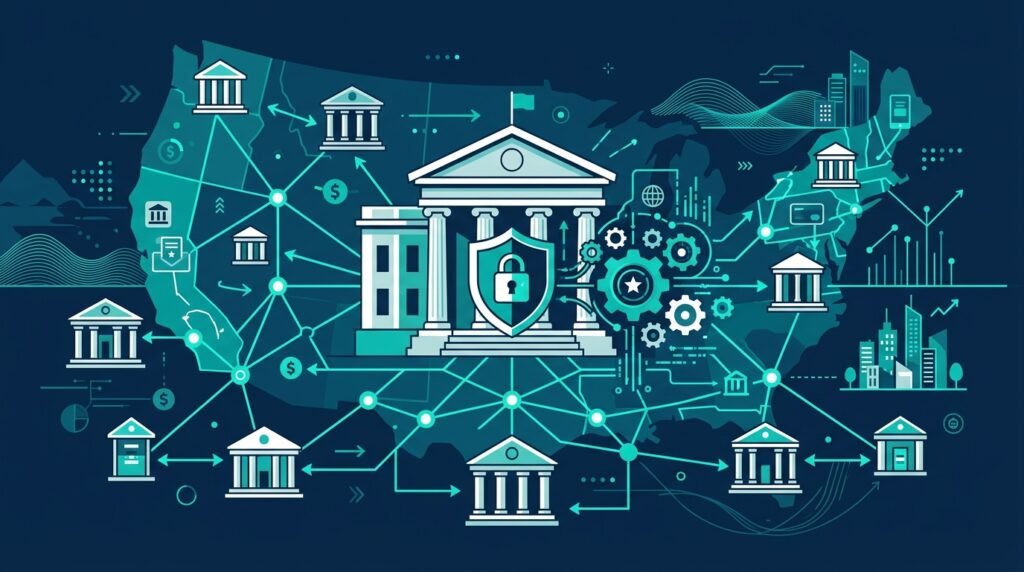
PayNet & the Regulators: Who Really Runs Malaysia’s Payment Plumbing
You’ve heard the brands — DuitNow, FPX, JomPAY, MyDebit. But who actually owns and runs the machinery underneath? The answer is two names working in tandem: Payments Network Malaysia (PayNet) and Bank Negara Malaysia (BNM).
What PayNet is
Payments Network Malaysia Sdn Bhd (PayNet) is the country’s national payments network and the central infrastructure for its financial markets. It builds and operates the systems that move money between institutions, including:
- DuitNow (transfers and QR)
- FPX (pay-via-online-banking)
- JomPAY (bill payments)
- MyDebit (national debit scheme)
- Interbank GIRO (batch transfers)
- RENTAS (large-value/real-time gross settlement)
If you’ve made a digital payment in Malaysia, you’ve almost certainly used PayNet rails.
Who owns it
PayNet is jointly owned by BNM and eleven local financial institutions — a structure designed to keep the national payment system in trusted, domestic hands.
- Bank Negara Malaysia is the single largest shareholder, holding about 35.5% (as of December 2025).
- The other shareholders are Malaysia’s major banks: Maybank, CIMB, RHB, Public Bank, AmBank, Hong Leong, Affin, Alliance, Bank Islam, Bank Muamalat, and Bank Rakyat.
Notably, BNM has signalled plans to gradually reduce its stake over the long term, aiming to increase market competition and industry leadership in the digital payment ecosystem.
The unusual part: it doesn’t pay dividends
Here’s what makes PayNet different from a normal company: its shareholders don’t take dividends. Instead, surplus profits are reinvested into keeping the nation’s payment infrastructure resilient, competitive, and accessible.
That’s deliberate. PayNet’s mandate is developmental, not commercial — its job is to provide inclusive, efficient payments for the whole ecosystem, not to maximise returns. It behaves more like national infrastructure (think roads or the grid) than a profit-seeking business.
Where BNM fits in
If PayNet builds and runs the highways, Bank Negara Malaysia writes the rules and polices them. As central bank and regulator, BNM:
- Licenses and supervises payment system operators and e-money issuers.
- Sets the mandate for PayNet to deliver inclusive, competitive digital payments.
- Guards security and resilience of the national payment system at the highest standard.
- Drives national strategy — its Financial Sector Blueprint 2022–2026 set targets for digital adoption, financial inclusion, and universal payment acceptance.
Leadership and the road ahead
PayNet continues to evolve at the top, with Praveen Rajan appointed Chief Executive Officer effective February 2026 after a period as CEO-designate. Under its stewardship, recent milestones include RENTAS+ for 24/7 large-value settlement (October 2025), expanding cross-border QR links across ASEAN, and enhancing the National Fraud Portal with predictive analytics.
Why this matters
Understanding PayNet and BNM is the key that unlocks every Malaysian fintech headline. When you read “BNM issues new guidelines” or “DuitNow adds a new country,” you now know exactly who’s acting and why: a regulator setting the rules and a non-profit national operator building the rails — together steering Malaysia toward a cashless, inclusive, and secure payment future.
FinDeskAsia — explaining the money behind Asia’s fintech.
