
Thailand Sets Five New Rules by March 2027, From BNPL Licences to Baht Stablecoins
The Bank of Thailand (BOT), the country’s central bank, has set out five new rules it plans to bring in between November 2026 and March 2027. They cover large cash gold trades, buy now, pay later (BNPL) lending, credit bureau fees, money changers and stablecoins linked to the Thai baht.
Governor Vitai Ratanakorn shared the timeline on 29 October at a year-in-review event, and said the central bank will also put non-bank financial firms, including payment service providers, under closer watch in 2027.
Key facts
- Controls on gold bought or sold in cash above 10 million baht (the baht is Thailand’s currency) are expected in November 2026.
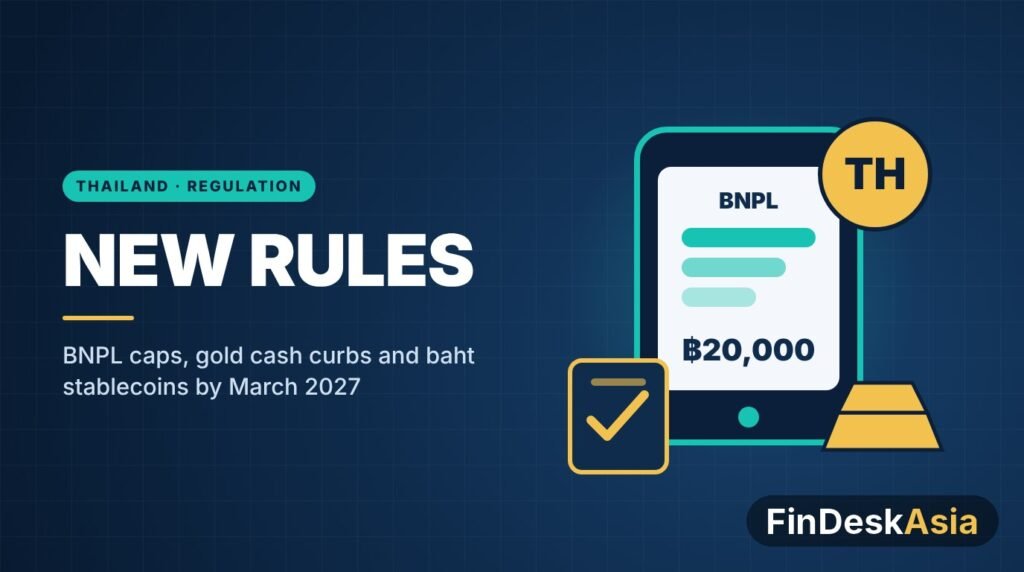
- A licensing framework for BNPL is expected in December 2026. The draft caps credit at 20,000 baht per person, repayment at six months and the effective interest rate at 15% a year.
- A cut in credit bureau checking fees is also planned for December 2026, followed by tighter standards for money changers in January 2027.
- Rules for baht-linked stablecoins are due in March 2027.
- The BOT plans to launch an SME Credit Portal in January 2027 to connect small and medium-sized businesses with lenders.
What the BNPL rules would change
BNPL lets shoppers split a purchase into instalments at checkout, often on e-commerce and delivery apps. In Thailand the service has grown quickly, and so have concerns that people are taking on debt for everyday spending. The draft rules, released for public comment until 15 November, would treat BNPL as proper credit rather than a checkout feature.
Under the draft, the 15% interest ceiling would also count fees and any price mark-up for paying in instalments, so providers cannot hide the cost elsewhere. Borrowers would need to be at least 20 years old, providers would have to check whether customers can repay, and interest, fees and payment schedules would have to be shown clearly. Digital lenders that do not get a licence once the rules apply could be forced to stop operating.
For platforms, the biggest change is the 20,000-baht cap across a customer’s total BNPL credit and the six-month repayment limit. Longer, larger instalment plans would have to be offered through other licensed credit products instead.
Why it matters
The package shows a central bank moving from banks to the fast-growing world outside them. Governor Vitai linked the stronger oversight of non-banks, which covers lenders, payment service providers, foreign-exchange businesses and asset management firms, to the sector’s larger size, more complex business models and rapid lending growth. Fair treatment of customers is the stated goal.
The gold and money-changer measures sit alongside the BOT’s wider drive against illicit money flows, which has already brought checks on large cash transactions. The stablecoin rules will build on the draft framework the central bank published earlier this month.
For the region, Thailand is one of several ASEAN markets now putting firm limits on BNPL. Malaysia has taken a similar route, bringing BNPL providers under federal oversight through its Consumer Credit Act 2025, so regional platforms that operate in both countries will need to manage different caps and licensing rules in each market.
Governor Vitai also stressed the limits of the central bank’s role. He said it is not the BOT’s job to stimulate the economy, which he described as the government’s responsibility, but to support it and fix long-standing structural problems.
What to watch
- The final BNPL rules after the consultation closes on 15 November, and which platforms apply for a licence.
- How strict the March 2027 baht stablecoin rules turn out to be for payment use.
- What closer supervision of payment service providers and other non-banks looks like in practice in 2027.
Related on FinDeskAsia: Thailand: Bank of Thailand Drafts Baht Stablecoin Rules With 1:1 Reserves and No Interest and Thailand: Bank of Thailand Extends 5 Million Baht Cash Checks to Deposits From 1 November.
Sources: The Nation Thailand (October 2026), Fintech News Singapore (October 2026), Chiang Rai Times (October 2026), EconoTimes (October 2026).
