
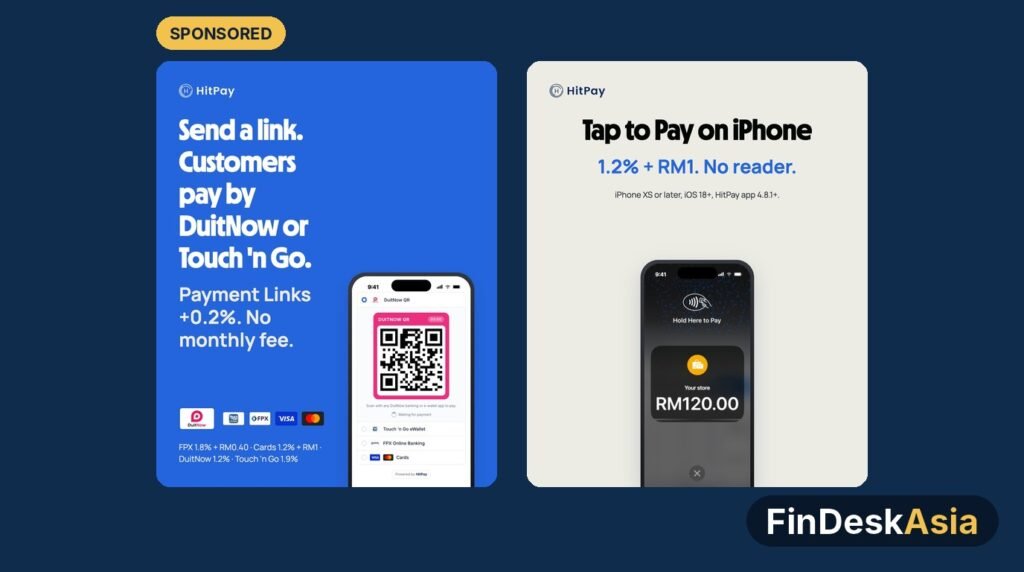
Sponsored: HitPay Brings FPX, DuitNow, Cards and E-Wallets Online and In Store in Malaysia
Sponsored: This post is sponsored by HitPay and was written by HitPay.
A small business in Malaysia can be asked to accept a card tap at the counter, a DuitNow QR scan at a weekend bazaar and an FPX transfer for an online order, all in the same week. Handling each one through a different provider means more accounts and more reconciliation.
HitPay is one of the providers that puts these methods in a single account. This explainer covers what it offers Malaysian businesses, what it charges and how payouts work, based on the company’s published pricing and documentation.
What HitPay is
HitPay is a payments platform for small and growing businesses. It was founded in Singapore in 2016 and serves merchants in Singapore, Malaysia, the Philippines, Hong Kong, Australia and the United States. Businesses use one account and one dashboard to take payments online and in person, with 40+ payment methods supported across its markets.
Payment methods in Malaysia
For Malaysian merchants, HitPay supports Visa and Mastercard alongside local methods: FPX, DuitNow Online Banking, DuitNow QR, Touch ‘n Go eWallet, GrabPay, ShopeePay and MAE. Buy now, pay later options include Atome, SPayLater and Grab PayLater. For international visitors there are WeChat Pay and Alipay+.
Not every method is available on every channel. The pricing page lists which methods apply to online, in-person and recurring payments.
Selling online
HitPay offers several ways to collect online, depending on how a business sells:
- Payment links: a link that can be shared on WhatsApp, Instagram or email, useful for businesses without a website.
- Invoicing: invoices sent from the dashboard that customers can pay with any enabled method.
- Online store: a built-in store builder for businesses that want a simple shop without a separate platform.
- E-commerce plugins: plugins for Shopify, WooCommerce, Wix and other platforms that add local methods such as DuitNow and Touch ‘n Go to an existing checkout.
- Recurring billing: automatic collection for memberships, retainers and subscriptions.
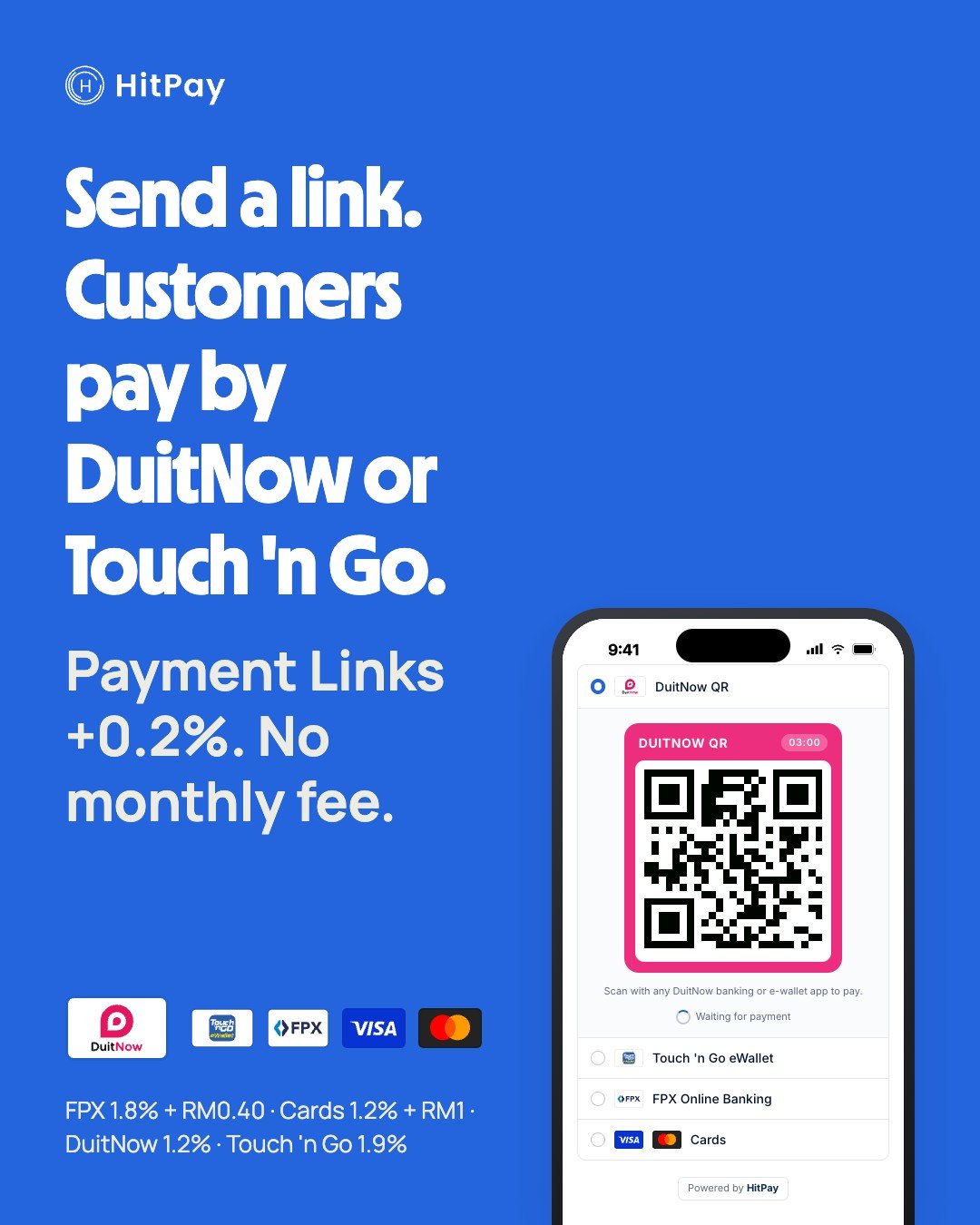
Developers can also integrate directly through HitPay’s API, which is documented at docs.hitpayapp.com.
Selling in store
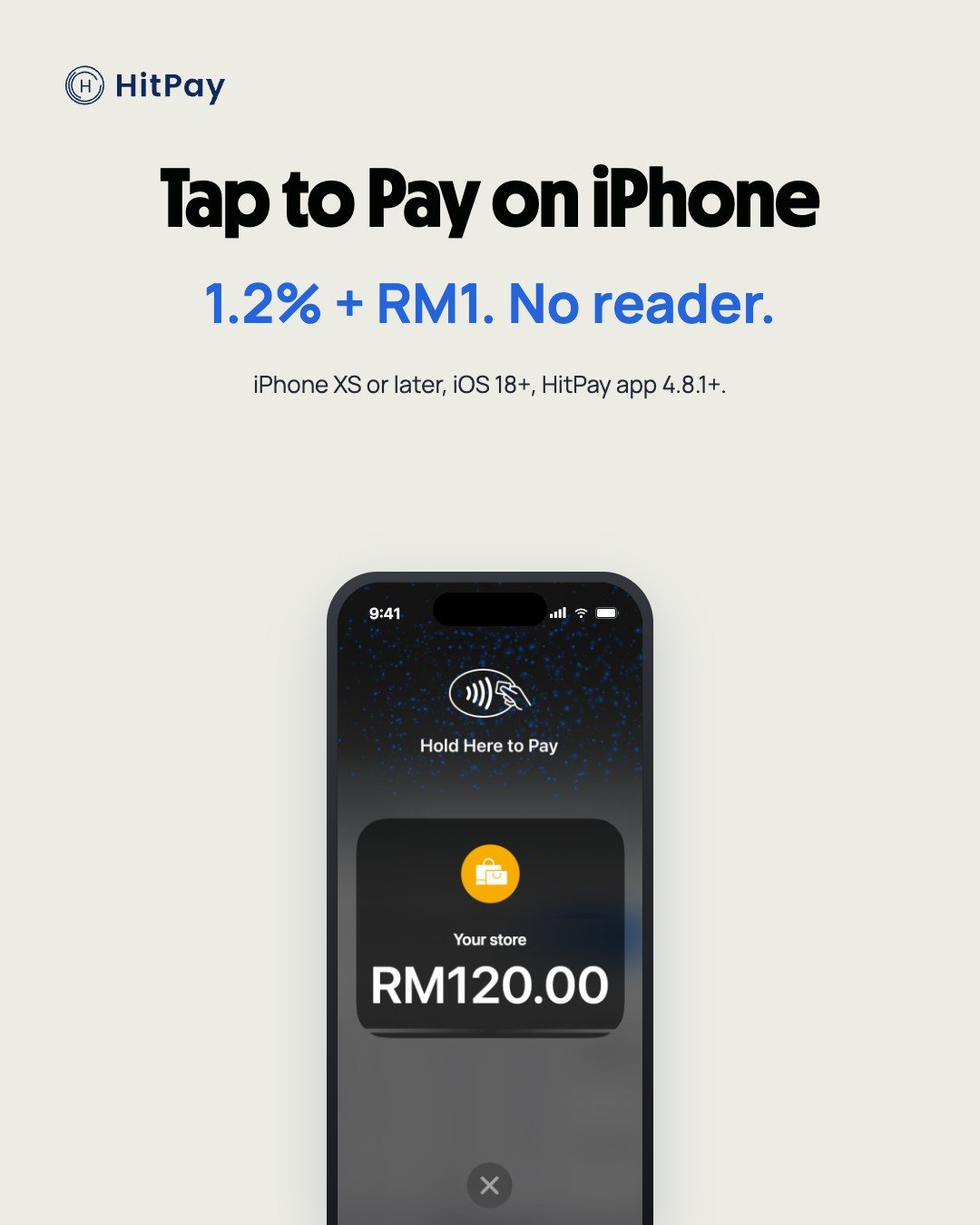
For counter and mobile sales, the HitPay POS app supports Tap to Pay on iPhone and on Android. This lets a merchant accept contactless card payments on a phone without a separate card reader. Tap to Pay on iPhone needs an iPhone XS or later. On Android it needs an NFC-enabled device running Android 11 or above.
Businesses that prefer dedicated hardware can buy a card terminal outright. HitPay’s Malaysia pricing page lists the WisePad 3 (RM310, Bluetooth), the HitPay All-in-One (RM850, Wi-Fi and cellular, with a built-in receipt printer) and the FlexiPOS (RM1,750, Wi-Fi, with support for a customer display). These are one-time prices, with no monthly rental. A printable static QR is also available for stalls and counters that only need QR payments.
Pricing
HitPay charges per transaction, with no setup fees and no monthly fees. The main online rates in Malaysia are:
| Payment method (online) | Fee per transaction |
|---|---|
| Domestic cards (Visa, Mastercard) | 1.2% + RM1 |
| International cards | 3% + RM1 |
| DuitNow | 1.2% |
| FPX | 1.8% + RM0.40 |
| Touch ‘n Go eWallet | 1.9% |
| GrabPay | 2% |
| Atome | 5.5% + RM1 |
Domestic card payments taken in person, including Tap to Pay and terminals, are also 1.2% + RM1, and DuitNow in store is 1.2%. An additional 2% applies to card transactions in a foreign currency.
On top of the payment method rate, HitPay lists a 0.2% fee for its business software (payment links, invoicing, the online store, POS and recurring billing) and for most plugins, including WooCommerce. The Shopify Payments App carries 0.5%. There is no extra fee for processing a refund, although the original transaction fee is not returned. Businesses with an average monthly volume above RM50,000 over the past six months can request custom pricing. Full rates, including other e-wallets, are at hitpayapp.com/my/pricing.
Payouts
Funds are paid out to the merchant’s bank account on a set schedule. FPX payments are paid out T+1 business day and card payments from T+1 business day. Other non-card methods, such as DuitNow and e-wallets, are paid out T+2 business days. HitPay notes that the final payout schedule for each business is decided by its compliance team on a case-by-case basis.
Regulation
HitPay operates in Malaysia through Mobiedge E-commerce Sdn Bhd, a registered merchant acquirer regulated by Bank Negara Malaysia.
How to get started
Businesses sign up at hitpayapp.com/my and submit their business details for verification. Once the account is approved, they can turn on the payment methods they want, create payment links or invoices, install a plugin, or download the HitPay POS app to accept payments in store. Card terminals can be ordered from the pricing page.
Frequently asked questions
Does HitPay charge a monthly fee in Malaysia?
No. There are no setup or monthly fees. Merchants pay only when a payment is processed.
Can I accept FPX and DuitNow on Shopify or WooCommerce?
Yes. HitPay’s plugins add local methods to these platforms. A plugin fee applies on top of the payment method rate (0.2% for WooCommerce, 0.5% for the Shopify Payments App).
Do I need a card reader to accept card payments in store?
No. Tap to Pay on iPhone and Android lets a supported phone accept contactless payments. Card terminals are available for businesses that want dedicated hardware.
Rates and payout terms are as published on the HitPay Malaysia pricing page on 3 November 2026 and may change. Related on FinDeskAsia: Payment gateways in Malaysia explained · How SoftPOS turns a phone into a card machine
