
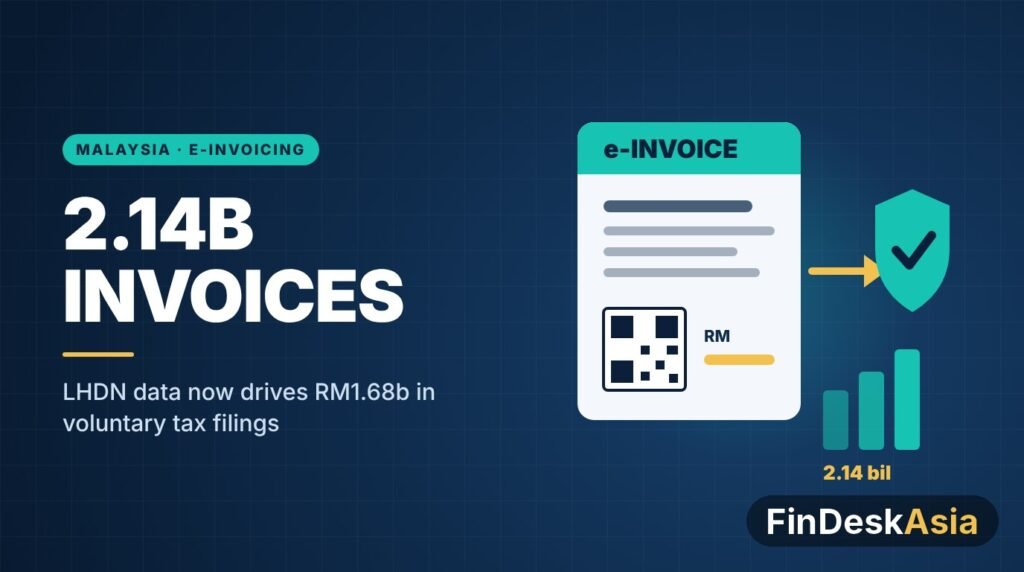
Malaysia Passes 2.14 Billion E-Invoices as LHDN Links Data to RM1.68 Billion in Back Taxes
Malaysian businesses have now sent more than 2.14 billion electronic invoices to the tax authority, Prime Minister Datuk Seri Anwar Ibrahim said on 3 November. He also linked the system to a wave of voluntary tax declarations worth RM1.68 billion, while stressing that e-invoicing is about fairness, not new taxes.
Key facts
- As of 2 November 2026, about 269,900 taxpayers had submitted a total of 2.14 billion e-invoices to the Inland Revenue Board of Malaysia (LHDN, also known as HASiL).
- More than 97,000 taxpayers voluntarily declared income from earlier years, covering RM1.68 billion in tax owed. Anwar credited stronger compliance checks backed by e-invoice data.
- Anwar said e-invoicing is “not intended to introduce new taxes or increase the public’s tax burden”.
- Gross direct tax collection rose 5.8% to RM174.48 billion in the first ten months of 2026, up from RM164.92 billion a year earlier.
- Businesses with annual revenue below RM3 million are currently exempt from mandatory e-invoicing, after LHDN raised the threshold from RM1 million at the end of August.
What e-invoicing is and how it works
An e-invoice is a digital invoice that a business sends to LHDN for checking, in real time or close to it, before or as it reaches the buyer. In Malaysia this runs through MyInvois, LHDN’s portal and API (an application programming interface that lets accounting, billing and point-of-sale software connect directly). Each approved invoice gets a unique ID and a QR code that the buyer can use to confirm it is genuine.
The system was rolled out in phases by company size. The largest firms, with revenue above RM100 million, started in August 2024. Smaller bands followed through 2025, and the final phase began in January 2026. Because LHDN now sees sales data as transactions happen, it can match what businesses bill against what they later declare. That is the link Anwar drew to the 97,000 voluntary declarations.
The figures were shared in a speech read by Finance Minister II Datuk Seri Amir Hamzah Azizan at HASiL’s 2026 Innovation and Integrity Day in Cyberjaya. Anwar also said decisions should not rest entirely on technology, warning that “AI does not possess moral values or humanity”, and asked officers to be firm on deliberate evasion while using discretion for taxpayers who need guidance.
What it means for Malaysians
- SMEs and merchants: Firms under RM3 million in yearly revenue do not have to issue e-invoices for now, but many already use them because large customers ask for them. Billing, POS and payment software that connects to MyInvois is fast becoming standard kit for small businesses.
- Consumers: Shoppers can ask for an e-invoice, for example to support tax relief claims, and check its QR code. Day-to-day payments by card, DuitNow QR or e-wallet are not affected.
- Banks, fintechs and software firms: Billions of structured, verified invoices create a richer data trail. Over time that could support faster invoice financing and cash-flow-based lending for SMEs, in the same way payment data is being used for credit scoring elsewhere in the region.
- Taxpayers who are behind: The message is that mismatches are now easier to spot, and coming forward voluntarily is the better route.
What to watch
- Whether LHDN changes the RM3 million exemption again, or sets a firm date for penalties on non-compliance.
- How quickly POS, e-commerce and payment gateway providers build MyInvois links into their merchant tools.
- Whether banks start using e-invoice records to speed up SME financing decisions.
Related on FinDeskAsia: Malaysia targets 20% more cashless payments for government services by 2030 · Payment gateways in Malaysia explained
Sources: Malay Mail (Nov 2026) · The Sun (Nov 2026) · TVS (Nov 2026) · The Vibes via Newswav (Nov 2026) · GRITC e-invoice guide (Oct 2026) · JomeInvoice (Sep 2026)
