Philippines: Home Credit Borrowers Can Now Repay Loans by QR Ph via PayMongo
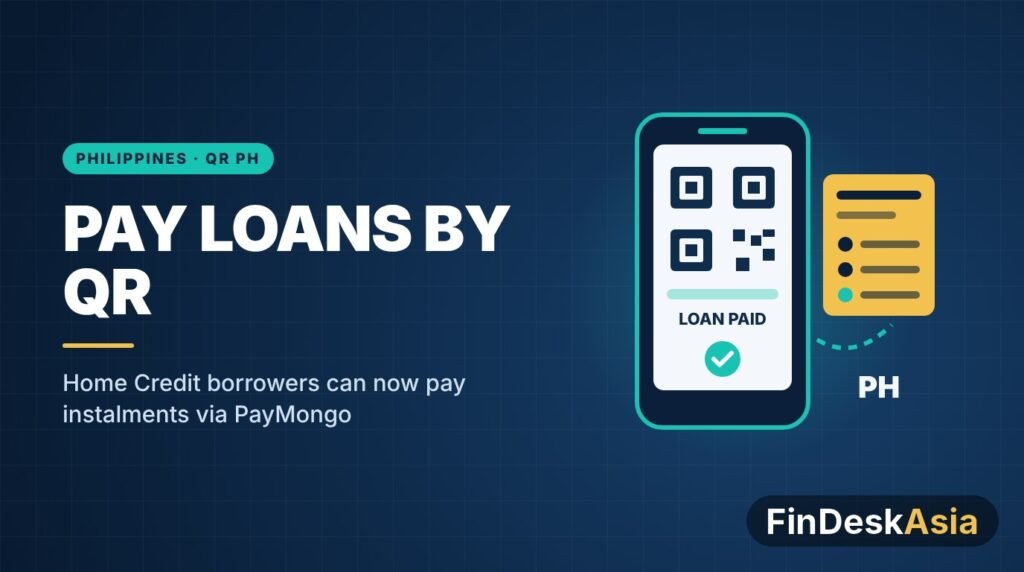
Filipino borrowers of consumer lender Home Credit can now pay their monthly instalments by scanning a QR code with almost any bank or e-wallet app. Home Credit and payment gateway PayMongo signed a formal agreement on 6 November, although the QR repayment channel has quietly been running since May 2026 and its use has grown every month.
Key facts
- Home Credit Philippines and PayMongo signed the deal on 6 November 2026 at Home Credit’s office in Bonifacio Global City.
- Borrowers scan a QR Ph code from any QR Ph-enabled bank or e-wallet app to pay; no special partner app or payment-centre visit is needed.
- The channel went live in May 2026, months before the signing, and repayments through it have grown each month.
- Home Credit says it has served more than 13 million Filipinos and financed over ₱400 billion in loans in its 13 years in the country.
- QR Ph, the national QR standard run under the Bangko Sentral ng Pilipinas (BSP), handled 2.47 billion transactions worth ₱1.16 trillion in 2025.
From shop counters to loan bills
QR Ph is the Philippines’ common QR code standard. One code can be scanned by apps from different banks and e-wallets, so a merchant does not need a separate code for each provider. Until now it has mostly been used at checkouts, in shops and online. The Home Credit deal stretches it to a different job: paying a recurring debt.
Home Credit lends to consumers for purchases they pay off in monthly instalments. Borrowers who do not want to visit an over-the-counter payment centre each month can now settle the bill from their phone, using whichever bank or e-wallet app they already have. The companies did not list the banks and e-wallets involved, or say whether any fee applies.
PayMongo chief executive Jojo Malolos said the partnership builds on “how money already moves in the Philippines today”, and described it as a way to reach deeper into the base of the income pyramid, where many people have an e-wallet but limited access to bank cards.
Why it matters
PayMongo’s own data shows how fast QR has taken over Philippine online payments. In the first half of 2026, QR Ph made up 55% of the payment volume on its platform, up from 16% a year earlier. E-wallets took 21% and credit cards 19%, while direct online bank transfers fell 26% and in-store QR Ph transactions more than tripled. PayMongo also said its number of active merchants grew 93% year on year as of August.
For lenders, a QR repayment channel can lower collection costs and make it easier for borrowers to pay on time, which in turn can help keep missed payments down. For the payment system, it shows the national QR standard moving beyond one-off purchases into bills and instalments, an area where Southeast Asian central banks are keen to see more digital payments.
There is a regional angle, too. The Philippines is part of ASEAN’s push to link national QR systems so that a code in one country can be scanned by apps from another. The BSP has been working on such links, including a plan announced this week with the National Bank of Cambodia. As QR Ph handles more types of payment at home, those cross-border links become more useful for travellers and migrant workers.
What to watch
- Whether Home Credit or PayMongo publish usage numbers for the QR repayment channel, and whether other lenders and BNPL firms adopt the same model.
- Any fees charged by banks or e-wallets when borrowers pay loans via QR Ph.
- Progress on the BSP’s cross-border QR links, which could one day let overseas Filipinos pay bills at home with a foreign app.
Related on FinDeskAsia: ASEAN’s cross-border QR payments record and Cambodia and Philippines central banks move to link their QR payment systems.
Sources: BitPinas (November 2026); TokenPost (November 2026); Fintech News Philippines (November 2026).
