
Cambodia and Philippines Central Banks Move to Link Their QR Payment Systems
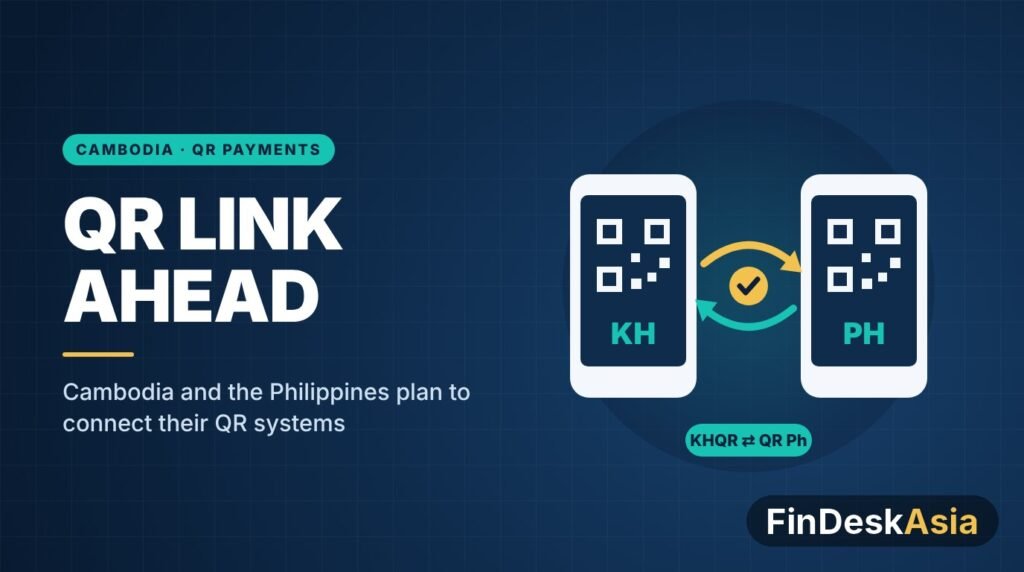
The central banks of Cambodia and the Philippines are working on a plan to connect their national QR payment systems. Once it is live, shoppers and businesses in either country should be able to pay across the border by scanning a local QR code with the app they already use at home. No launch date has been set yet.
Key facts
- The Bangko Sentral ng Pilipinas (BSP), the Philippine central bank, said in a statement on Friday, 13 November, that it and the National Bank of Cambodia (NBC) had reaffirmed their commitment to working together on payments.
- The two sides discussed the proposed Philippines–Cambodia QR link at a bilateral meeting in Phnom Penh on 30–31 October, led by BSP Governor Eli Remolona Jr. and NBC Governor Chea Serey.
- They are still working through interoperability, regulatory requirements and governance, and possible operating arrangements for the banks and payment firms that would take part.
- The meeting also covered cyber-incident response, sharing information on cyber threats, and efforts to fight financial fraud.
What is being linked
On the Cambodian side, the link would run through Bakong, the NBC’s national payment platform, and KHQR, Cambodia’s common QR code standard. Any bank or wallet that supports KHQR can be scanned by any other, much like a single national QR sticker at the checkout.
The Philippines has its own national QR standard, QR Ph, which lets customers of different banks and e-wallets pay one another and pay shops with the same code. A cross-border link joins the two systems so that a tourist’s home app can read the other country’s code, convert the currency and settle the payment between the two sides.
The BSP said the aim is to make payments between the two countries faster, cheaper and more convenient, especially for travellers, businesses and consumers. Neither central bank has published fees, limits or a list of participating institutions yet.
Why it matters
For Cambodia, a Philippine link would extend one of the busiest QR networks in Southeast Asia. Cambodia already has operational QR links with five ASEAN neighbours: Laos, Malaysia, Singapore, Thailand and Vietnam. A regional report in August ranked it second only to Thailand in ASEAN cross-border payment integration. It has also started a link with Japan.
For the Philippines, the move adds to its push on cross-border payments. In 2023 the BSP was one of five regional central banks that said they would connect their instant payment systems through Project Nexus, a multi-country scheme backed by the Bank for International Settlements. Bilateral QR links like this one can deliver benefits sooner, while Nexus is still being built.
For the wider region, every new bilateral link fills in another piece of the ASEAN payment connectivity map. Each pair of countries that connects makes it easier for small merchants to accept foreign visitors’ payments without card fees, and for travellers to avoid carrying cash or paying high card mark-ups.
There is also a quieter Malaysia angle. DuitNow QR, Malaysia’s national QR standard, is already linked with Cambodia, so Malaysian travellers and businesses already see what a working KHQR connection looks like in practice.
What to watch
- Whether the BSP and NBC sign a formal agreement and set a launch date or a pilot phase for the QR link.
- Which banks and e-wallets join first on each side, and what fees and exchange rates users will see.
- How the shared work on fraud and cyber threats shapes safeguards for cross-border QR payments.
Related on FinDeskAsia: ASEAN’s cross-border QR record and Nexus targets Q4 2027 to link instant payments in six Asian countries.
Sources: The Manila Times (November 2026); Khmer Times (November 2026); The Star / Bernama (August 2026); BusinessWorld (August 2024); Xinhua (July 2025).
