
Malaysia’s BNPL Users Hit 9.2 Million as Spending Reaches RM14.7 Billion in Six Months
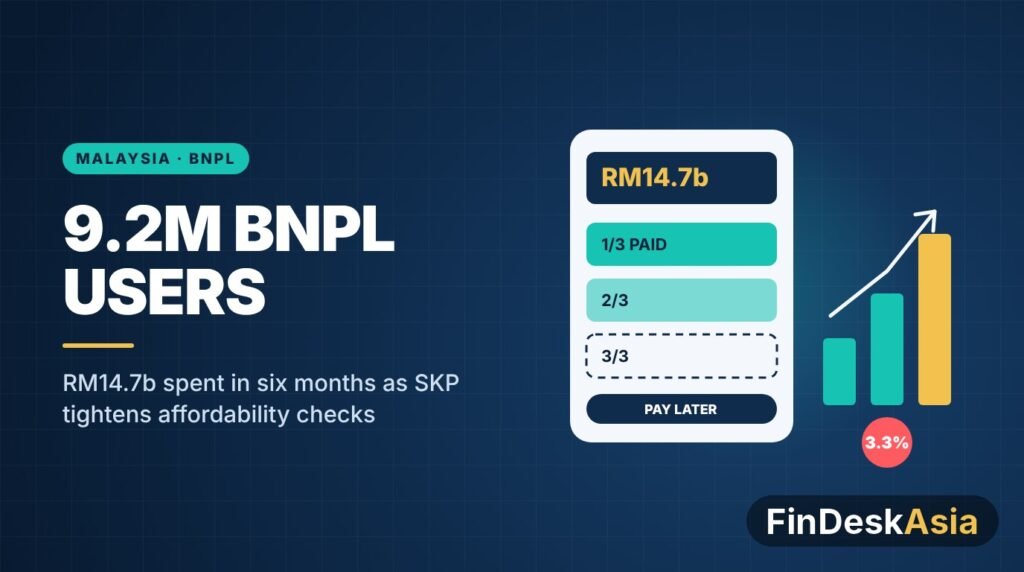
Malaysians are using buy now, pay later (BNPL) more than ever. A written reply to Parliament from the Finance Ministry shows 9.2 million active BNPL accounts as at 30 June 2026, and about RM14.7 billion spent through these plans in the first six months of the year.
The same reply says roughly 70% of active users come from lower-income groups. The ministry describes repayment problems as manageable for now, while the new consumer credit regulator tightens the rules on who can be offered credit.
Key facts
- 9.2 million active BNPL account holders as at 30 June 2026, up 22.7%.
- 173.9 million BNPL transactions in the first half of 2026, up 23.9% from 140.4 million in the second half of 2025.
- Transaction value rose 22.5% to RM14.7 billion, from RM12 billion.
- Outstanding BNPL financing stood at RM6.6 billion, with RM220.4 million (3.3%) in arrears.
- Young people made up almost 40% of transactions, and lower-income earners about 70% of active users.
What the numbers say
BNPL lets a shopper split a purchase into a few smaller payments, often interest-free if each one is paid on time. In Malaysia it is offered by e-commerce platforms, e-wallets and specialist providers, at checkout online and increasingly at physical shops.
The figures came in a written reply from Prime Minister and Finance Minister Datuk Seri Anwar Ibrahim to Bachok MP Mohd Syahir Che Sulaiman, who asked about BNPL use, arrears and the risk of over-borrowing among young and lower-income consumers. The data was compiled by the Consumer Credit Commission, known by its Malay initials SKP.
Growth is steady rather than explosive: both the number of transactions and the money spent rose by a little over a fifth in six months. Earlier ministry data put active accounts at around eight million at the end of the first quarter, so the user base is still widening.
The arrears ratio of 3.3% is the number regulators will watch most closely. It is modest today, but it applies to a balance of RM6.6 billion that is spread across millions of small, short-term loans, many taken by people with thin financial buffers.
How BNPL is now regulated
Under the Consumer Credit Act 2025 (Act 873), BNPL providers are regulated by the SKP, alongside other non-bank credit providers. The ministry listed the main obligations:
- Providers must check a customer’s creditworthiness and ability to repay before approving financing.
- They may not grant or raise credit for consumers who are likely to struggle with repayments.
- Terms, fees and charges must be disclosed clearly, and marketing must not mislead.
- Providers must follow the SKP’s conduct standards and its licensing and registration standards.
The SKP is also working with the Credit Counselling and Debt Management Agency (AKPK) and the Financial Education Network (FEN) on financial literacy campaigns aimed at young and lower-income users.
What it means for Malaysians
For consumers, the new rules mean BNPL approvals should no longer be automatic. Expect more questions about income and existing commitments, and possibly lower limits if you already carry several plans. Treat each instalment plan as a real loan and add them up before taking another.
For merchants and SMEs, BNPL remains a useful way to lift basket sizes, especially online. But affordability checks may slightly reduce approval rates at checkout, and shops should make sure any BNPL promotion they run follows the rules on clear, non-misleading marketing.
For providers and banks, compliance costs are rising. Firms that can assess affordability well, using better data, will be able to keep growing while holding arrears down. Those that relied on easy approvals to grow may find the next phase harder.
What to watch
- Whether the 3.3% arrears ratio rises in the second-half 2026 figures as lower-income usage grows.
- Further SKP guidance on affordability checks, limits and how BNPL debts appear in credit records.
- How e-wallets and e-commerce platforms adjust approval rates and promotions in response.
Related: Youth BNPL Debt Reaches RM2.4 Billion Amid Tightening Credit Regulations · Malaysia’s e-wallet war
Sources: The Star (October 2026) · The Vibes via Newswav (October 2026) · World of Buzz (October 2026) · NST (July 2026)
