
Vietnam Pushes QR Links With Malaysia, Singapore and India as Reach Tops 60 Markets
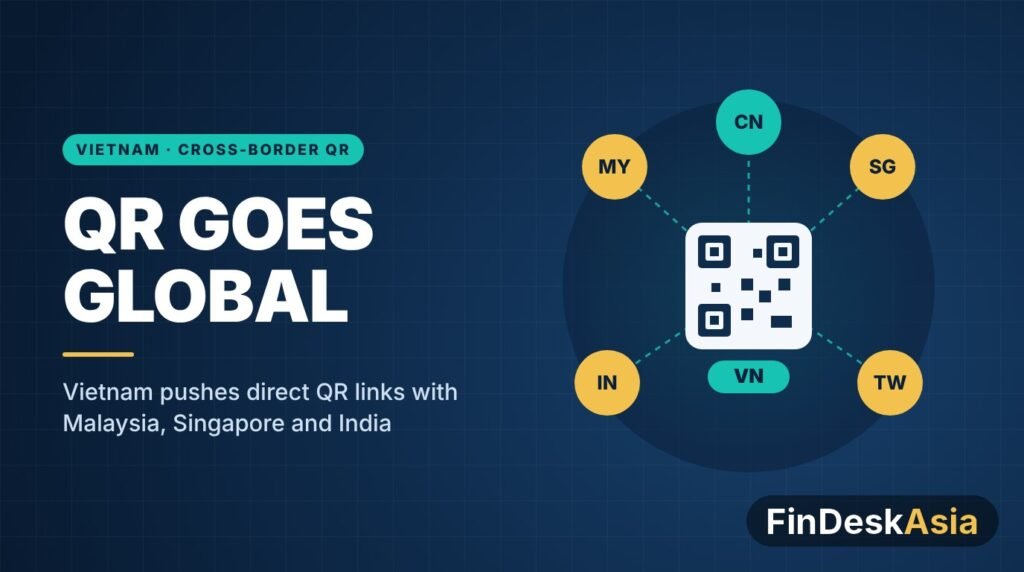
Vietnamese travellers can now pay by scanning a QR code in more than 60 countries and territories, and the country’s central bank wants to turn that reach into direct, bank-to-bank links with more of its neighbours. At a payments seminar in Hanoi last week, the State Bank of Vietnam (SBV) said bilateral QR payments are already running with China and are being promoted with Singapore, Taiwan, India and Malaysia.
Key facts
- Vietnamese users can pay by QR code in more than 60 countries and territories, according to speakers at Vietnam Digital Payment Day 2026 in Hanoi.
- E-wallet MoMo says its app connects users to about 100 million payment acceptance points abroad and works with 56 airlines for flight bookings.
- The SBV’s Payment Department said bilateral cross-border QR payment is live with China and being promoted with Singapore, Taiwan, India and Malaysia.
- Vietnam already has QR links with Thailand, Laos and Cambodia, and added China and South Korea in the first half of 2026.
- MoMo says its systems flag about 29,000 unusual transactions a day as part of its fraud controls.
From wallet reach to country-to-country links
There are two ways a Vietnamese tourist can pay with a phone overseas. The first runs through private networks: MoMo, Vietnam’s largest e-wallet, plugs into international partners such as Alipay, WeChat, Japan’s PayPay and Thailand’s PromptPay, which together give its users access to merchants from 7-Eleven stores in Japan and South Korea to Big C in Thailand. MoMo says it shows the exchange rate before each payment and does not charge a foreign currency fee.
The second route is the one the central bank is pushing: direct links between national payment systems. In Vietnam that system is run by NAPAS, the National Payment Corporation of Vietnam, which operates the country’s interbank switch and the VietQR standard. When NAPAS connects to another country’s network, a shop in Hanoi can accept a visitor’s home banking app, and a Vietnamese customer can pay abroad with their own bank app, without a card or an extra wallet.
Speaking at the seminar, SBV Deputy Governor Pham Tien Dung asked NAPAS to help banks set technical standards and connect systems for cross-border transactions, and urged banks and payment firms to build services that cover the whole customer journey, from booking to paying. Pham Anh Tuan, director of the SBV’s Payment Department, named three priorities: connecting infrastructure, integrating services and building digital trust, including clear fees and terms and better ways to handle complaints.
Why it matters
Tourism is the main driver. Vietnam switched on QR payments for visitors from China and South Korea in April 2026, and officials said earlier this year that daily spending through those links rose quickly once they went live. Every new bilateral link means a visitor can pay in Vietnam with an app they already use, and small merchants can take that money without renting a card terminal.
For the region, Vietnam’s push fits a wider ASEAN effort to connect national QR systems so that people and small businesses can pay across borders in local currencies, rather than routing everything through card networks and the US dollar. Officials have said they aim for links with about seven countries and territories by the end of 2026.
There is a direct Malaysian angle. Malaysia is on the SBV’s list of markets for bilateral QR payment, alongside Singapore, Taiwan and India. Malaysia’s own national QR standard, DuitNow QR, is run by PayNet, the country’s payment network operator, and already links with several ASEAN neighbours. A Vietnam–Malaysia link would let Malaysian travellers pay at Vietnamese shops with their usual banking or e-wallet app, and Vietnamese visitors do the same in Malaysia. No launch date has been announced.
Security is the other half of the story. Officials at the event stressed consumer protection, data security and fraud prevention, warning that cross-border payments pass through many banks and systems that follow different national rules.
What to watch
- Whether NAPAS announces a firm launch date for QR links with Singapore, Taiwan, India or Malaysia before the end of 2026.
- How fees and exchange rates on bank-to-bank QR links compare with e-wallet and card options for travellers.
- New joint rules between Vietnam and its partners on fraud alerts and complaint handling for cross-border QR payments.
Related on FinDeskAsia: ASEAN cross-border QR payments hit a record and DuitNow explained.
Sources: Tuoi Tre News (October 2026); VnExpress International (August 2026); SGGP (May 2026); VnEconomy (September 2026).
