
Indonesia: Bank Indonesia to Pool QRIS Payment Data With OJK to Widen Small-Business Loans
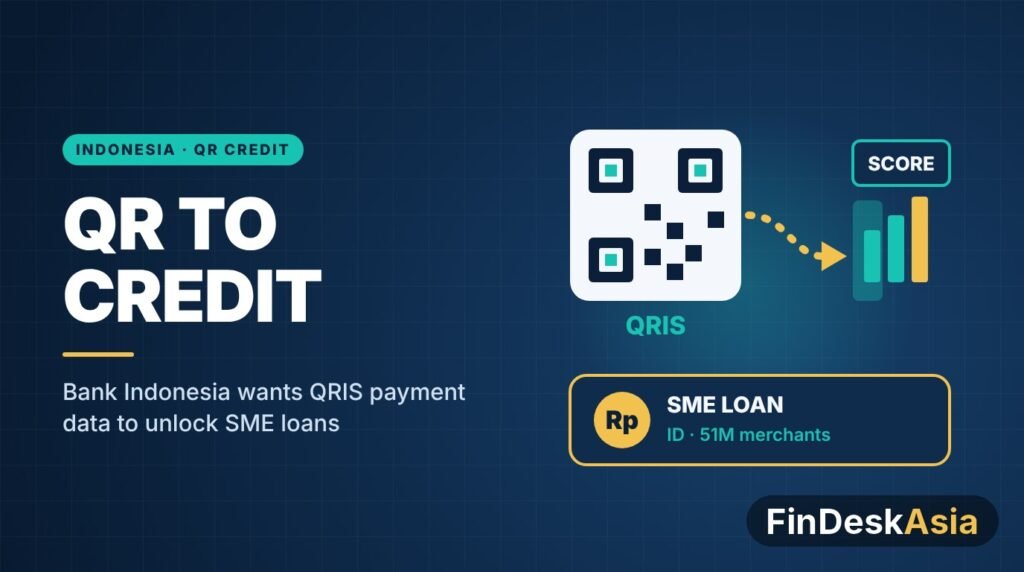
Bank Indonesia wants the country’s QR payment records to do more than settle bills. Governor Destry Damayanti says the central bank will combine transaction data from QRIS with the Ministry of MSMEs and the Financial Services Authority (OJK) so that banks can see which small merchants are creditworthy and lend to more of them.
The plan builds on a credit-scoring idea BI first floated in October. Its latest move is to put the idea into practice with other agencies, at a time when QRIS has more than 51 million merchants.
Key facts
- QRIS (Quick Response Code Indonesian Standard) is the single national QR code run by Bank Indonesia. Any bank or e-wallet app can pay any QRIS merchant.
- QRIS had about 71.9 million users and 51.3 million merchants as of October 2026. The large majority of those merchants are micro, small and medium enterprises (MSMEs).
- QRIS transactions grew 70.95% year on year in October 2026. Cumulative transactions passed 20 billion by the third quarter.
- BI will pool QRIS data with the Ministry of MSMEs and the OJK, Indonesia’s financial services regulator. The aim is to map which businesses qualify for loans and widen bank credit to them.
- Destry said lending to MSMEs is still very low. She said merchants’ and users’ past transaction records would help decide which businesses get financing.
From payment trail to credit file
Many Indonesian street vendors, warung owners and home businesses have no audited accounts, tax filings or land titles to offer a bank. That makes them hard to assess, and it is one reason MSME lending has lagged even though these firms make up most of the economy.
QRIS changes that picture. Every scan leaves a digital record: how often a shop sells, how much, at what times, and how steady its income is from month to month. Lenders around the world already use this kind of alternative data, information that is not part of a traditional credit file, to score borrowers who have thin or no credit histories.
At an investment forum in Jakarta on 26 October, Destry said QRIS data could become one reference point for MSME credit scoring. The new step adds the institutions that matter for lending. The MSME ministry runs programmes for small businesses, and the OJK supervises banks and keeps the national credit-reporting system. BI also plans to use its 46 regional offices to mentor local small businesses and to share data on promising sectors and their labour needs.
Why it matters
For Indonesia, the test is whether a payments network can become a credit network. If banks trust the QRIS-based signals, a vendor who has accepted QR payments for a year could get a working-capital loan without collateral. That could pull more informal businesses into the formal financial system.
There are risks. Scoring models built on payment data can shut out merchants who still take mostly cash, and sharing data between agencies raises questions about consent and privacy. BI has also warned that digital fraud is growing more organised and AI-driven, and that it could erode trust in QR payments if left unchecked. Lenders will want clean, reliable data before they rely on it.
The move also matters for the region. Several ASEAN central banks are linking their national QR systems, and Indonesia’s QRIS is one of the largest. A working model of using QR transaction data to support lending would give other markets with big informal sectors a template to study.
What to watch
- Whether BI, the OJK and the MSME ministry publish a formal data-sharing framework, including rules on merchant consent.
- Which banks are first to offer loans scored on QRIS data, and on what terms.
- Whether MSME credit growth picks up in the months after the data goes live.
Related on FinDeskAsia: How ASEAN cross-border QR payments are growing
Sources: Suara.com (November 2026), CNBC Indonesia (November 2026), ANTARA (October 2026), Jakarta Globe (November 2026)
