
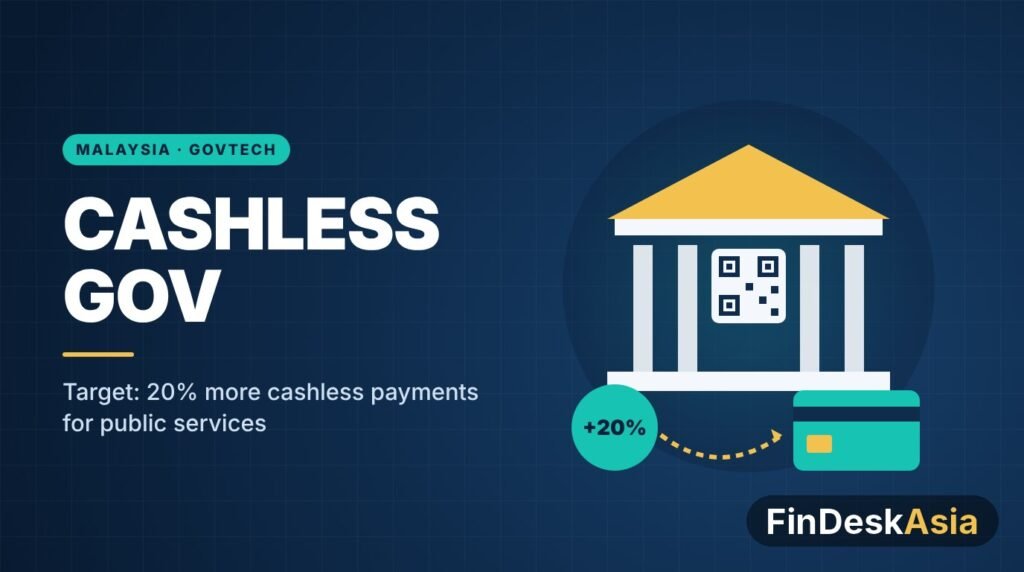
Malaysia Targets 20% More Cashless Payments for Government Services by 2030
Malaysia wants paying the government to feel as easy as paying a hawker with a QR code. Under its Public Sector Digitalisation Plan 2026–2030, which Budget 2027 builds on, the government is targeting a 20% rise in cashless transactions for its services over five years, largely by pushing its iPayment collection system into more counters and agency systems.
The aim is fewer queues and less paperwork, not an end to cash. Ringgit notes and coins will still be accepted while the government nudges more people towards cards, online banking, QR codes and e-wallets.
Key facts
- The Public Sector Digitalisation Plan 2026–2030, known in Malay as Rancangan Pendigitalan Sektor Awam (RPSA), targets a 20% increase in cashless transactions for government services over five years.
- It calls for iPayment, the federal e-collection system run by the Accountant General’s Department, to be integrated across government counters and systems.
- The plan also targets a 20% increase in services that need no face-to-face visit, and 90% of major agency services available through digital channels by 2030.
- A single government UI/UX design standard for websites and apps is due by 2028.
- Officials stress the goal is to grow cashless payments, not to abolish cash at public-sector counters.
What is iPayment?
iPayment is the federal government’s shared electronic collection platform. It was built for ministries and agencies that do not have their own payment system, so each department does not have to build and maintain one. The first phase added an online portal, and a second phase launched in February 2025 brought payments to physical counters and a mobile app.
Users can pay with debit, credit and prepaid cards, internet banking, QR codes and e-wallets. In practice, this means fees, fines and charges at many federal offices can be settled with the same tools Malaysians already use for daily shopping, including DuitNow QR, the national QR standard run by PayNet, the country’s main payments network.
Under the new plan, iPayment is meant to reach further into government counters and back-end systems, rather than sitting alongside them as a separate option.
What it means for Malaysians
For consumers, the most visible change should be fewer trips to a counter and less time waiting with cash in hand. The plan pairs cashless payment with wider use of MyDigital ID, the national digital identity app, so people can log in once, verify who they are, and pay in a single online journey. The planned UI/UX standard should also make government websites look and work more alike, with clearer menus and simpler navigation.
For businesses and SMEs, paying licences, permits and other charges digitally makes record-keeping easier. Electronic receipts are simpler to track and reconcile than paper ones, which helps at tax time.
For banks, e-wallets and payment providers, government collections are a steady, high-trust source of transactions. More government counters accepting QR and card payments also helps make cashless habits stick, especially among older users and people outside the big cities who still prefer cash.
There are limits. The targets describe what the government intends to achieve by 2030, not a promise that any specific service will change by a set date. Delivery depends on each ministry, state government and local council, and the plan covers all of them. The government also says it will focus on improving existing platforms rather than launching more apps.
What to watch
- Which ministries, state agencies and local councils add iPayment at their counters next, and whether e-wallet and QR options appear everywhere.
- Whether MyDigital ID login and iPayment become one seamless step for common services such as licences and fines.
- Progress on the 2028 UI/UX standard and any public data on how many government payments are cashless.
Read more: How Malaysia’s payment system works and DuitNow explained.
Sources: Malay Mail (November 2026); National Digital Department, RPSA 2026–2030 synopsis (April 2026); The Sun (February 2025).
