
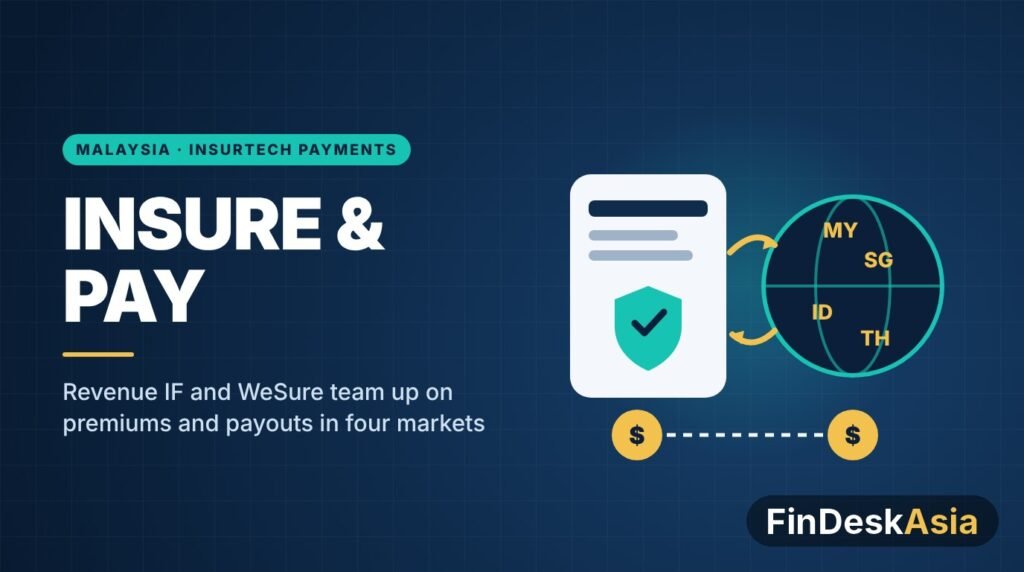
Revenue IF Teams Up With Tencent’s WeSure on Insurance Payments in Four ASEAN Markets
Malaysian payments firm Revenue IF Bhd has signed a framework agreement with Zhuhai Hengqin WeSure Digital Technology, the China-based online insurance arm that The Edge describes as part of Tencent, to build cross-border and insurance payment services in four South-east Asian markets. The deal, disclosed to Bursa Malaysia on 21 October 2026, is a bet that the money moving between insurers, policyholders and claimants can become a new growth line for a local payments player.
Key facts
- Revenue IF and WeSure signed a strategic cooperation framework agreement, announced in a Bursa Malaysia filing on 21 October 2026.
- The tie-up covers Malaysia, Singapore, Indonesia and Thailand.
- It focuses on three areas: cross-border payments, aggregated payment solutions for the insurance industry, and jointly developing insurance-related business.
- The arrangement is exclusive in the four markets for an initial three years, renews automatically year by year, and either side can end it with 30 days’ written notice.
- Revenue IF does not expect a material impact on its earnings per share, net assets per share or gearing for the financial year ending 31 March 2027.
What the two sides bring
According to the filing, Revenue IF will contribute its local payment licence and its clearing and settlement infrastructure, the back-end plumbing that moves money between banks and merchants and makes sure each side ends up with the right balance. WeSure brings its experience of selling and servicing insurance digitally in China.
The companies plan to link their systems so that payment processing, clearing and settlement, premium collection (the money policyholders pay to keep cover active) and claims disbursement (the money insurers pay out) can run through one connected setup. An “aggregated” payment solution in this context means a single gateway that lets an insurer accept many payment methods, such as cards, online banking and e-wallets, through one integration instead of many separate ones.
Revenue IF said the deal supports its strategy to expand its payment business and grow its presence in the regional cross-border payments market, and that it should open up new customer segments in the insurance sector.
What it means for Malaysians
For now, nothing changes for consumers. This is a framework agreement, so it creates no binding obligations until the two companies sign definitive agreements, and no products, launch dates or deal value have been disclosed. If it moves ahead, the practical effects could include:
- Policyholders: more ways to pay premiums digitally and, potentially, faster claim payouts straight into a bank account or wallet.
- Insurers and takaful operators: one payment partner that can collect and pay out money across several ASEAN markets, which matters for groups with regional customers.
- The local payments industry: a sign that smaller Bursa-listed payment firms are looking beyond retail merchants to sector-specific flows such as insurance premiums and claims.
Any insurance-related service offered locally would still need to sit within Bank Negara Malaysia’s (BNM) rules for payment operators and insurers.
What to watch
- Whether Revenue IF and WeSure sign definitive agreements, and what financial terms they disclose.
- Which insurers or takaful operators sign up first, and in which of the four markets.
- Any regulatory approvals needed in Singapore, Indonesia or Thailand for the new services.
Related on FinDeskAsia: How payment gateways work in Malaysia and PayNet and the regulators.
Sources: The Edge Malaysia (October 2026); The Star (October 2026); The Star (October 2026).
