
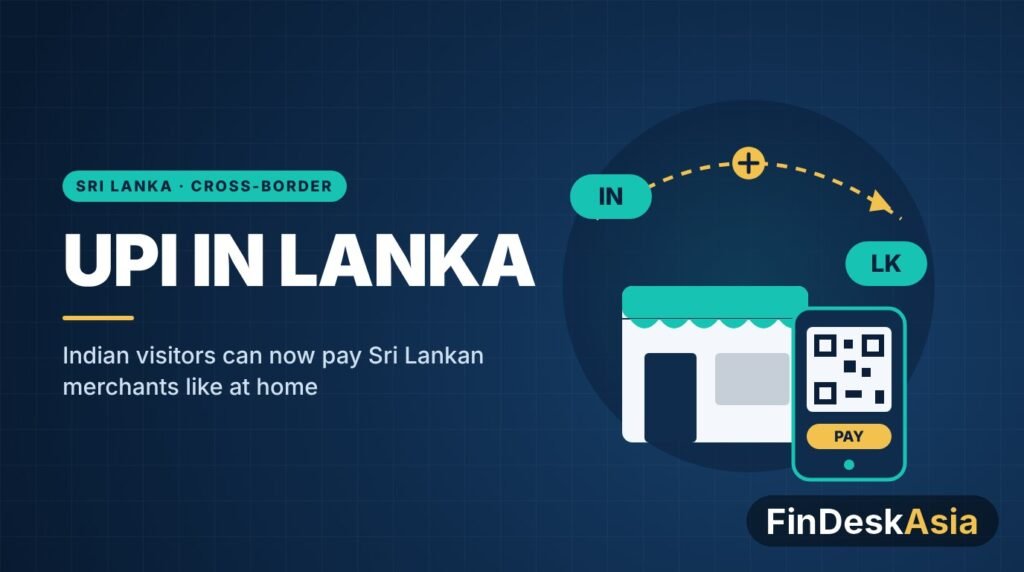
Sri Lanka: Pine Labs and WEBXPAY Let Merchants Accept UPI and Indian Cards
Indian visitors in Sri Lanka can now pay many local hotels, travel firms and online shops the way they pay at home. Indian payments company Pine Labs has teamed up with Sri Lankan payment gateway WEBXPAY so merchants on WEBXPAY’s network can accept UPI, Indian cards and Indian net banking, with no change to their existing set-up.
The companies describe it as the first partnership of its kind in Sri Lanka between two payment aggregators, and Pine Labs says Southeast Asia is next on its list.
Key facts
- Merchants using WEBXPAY can now accept UPI (India’s real-time mobile payment system), UPI AutoPay, cards from major Indian issuers and net banking from more than 100 Indian banks.
- They can also offer EMI conversions (splitting a purchase into monthly instalments) and Credit on UPI, a credit line that is paid out through UPI.
- Merchants are settled on a T+1 basis, meaning they receive the money one business day after the sale.
- The arrangement runs under the Reserve Bank of India’s Payment Aggregator – Cross Border (PA-CB) framework, and Sri Lanka is Pine Labs’ first activation under it.
- More than 530,000 Indian travellers visited Sri Lanka in 2025, making India the island’s largest source of tourists.
How the set-up works
A payment aggregator is a company that lets many merchants accept different payment methods through one connection, without each shop signing separate deals with banks and card networks. In this case one aggregator plugs into another. WEBXPAY already serves Sri Lankan businesses in hospitality, travel, retail and e-commerce. Pine Labs, one of India’s larger merchant payment firms, brings the Indian side: access to UPI, Indian card issuers and Indian bank accounts.
The result is that a hotel in Colombo or a tour operator in Kandy can show Indian guests the same checkout options they would see on an Indian website. The new methods sit inside the merchant’s current WEBXPAY integration, so there is no new terminal, app or contract with an Indian bank to manage.
The PA-CB framework is the Indian central bank’s rulebook for companies that process cross-border payments for imports and exports. It lets authorised firms such as Pine Labs handle money moving between Indian customers and overseas merchants under Indian oversight.
Why it matters
For Sri Lanka, tourism is a key source of foreign income, and India is its biggest market. Indian travellers are used to paying almost everything by scanning a UPI code or using locally issued cards with instalment options. When those options are missing abroad, shoppers may carry cash, pay high card fees or simply spend less. Giving them familiar methods at checkout could help merchants convert more bookings and sales.
The deal also shows how Indian payment firms are expanding abroad. Rather than every Indian payment method negotiating access country by country, a licensed Indian aggregator can partner with a local gateway and switch on a full menu of options at once. Pine Labs’ executives said they intend to repeat the model in Southeast Asia and other markets with a sizeable Indian traveller and consumer presence.
For merchants, quick settlement matters too. Small hotels and travel agents often run on tight cash flow, and next-day payouts make foreign-customer sales easier to manage than slower card settlement cycles.
Thilak Piyadigama, executive chairman of WEBXPAY, called the partnership a practical digital payment bridge for Sri Lankan businesses. Tanya Naik, who heads Pine Labs’ online business, said Indian consumers carry expectations shaped by their domestic payment stack when they travel.
What to watch
- Which Southeast Asian market Pine Labs activates next under the PA-CB framework, and whether it again works through a local gateway.
- Take-up among Sri Lankan hotels and travel firms, and whether instalment and Credit on UPI options lift average booking values.
- How this aggregator-led route sits alongside central bank-led efforts to link national QR and instant payment systems across Asia.
Related on FinDeskAsia: ASEAN cross-border QR payments hit a record · How Malaysia’s payment system works
Sources: Fintech News Singapore (October 2026) · The Paypers (October 2026) · Lanka Business Online (October 2026)
