
Kazakhstan Names 8 Countries for QR Payment Links, From China and India to Indonesia
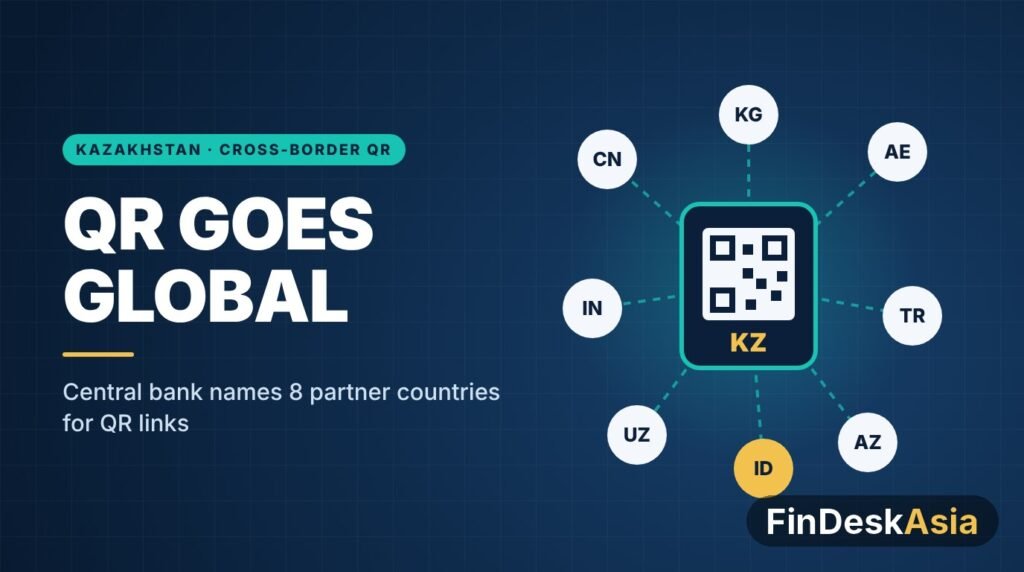
Kazakhstan’s central bank has named the eight countries it wants to connect to its national QR payment network, from China and India to Türkiye and Indonesia. If the links go live, people in Kazakhstan could pay for shopping abroad by scanning a shop’s QR code with the banking app they already use at home, and visitors could do the same in Kazakhstan with their own apps.
Key facts
- Eight partners named: Binur Zhalenov, deputy chairman of the National Bank of Kazakhstan, said the bank is working to link the country’s interbank mobile QR payment system with the UAE, China, Kyrgyzstan, India, Türkiye, Uzbekistan, Azerbaijan and Indonesia.
- Two-way payments: Kazakh customers would scan merchants’ QR codes abroad in their usual bank apps, and foreign visitors could pay in Kazakhstan with apps from their home countries.
- Regional deal: The central banks of Kazakhstan, Kyrgyzstan, Tajikistan, Uzbekistan and Azerbaijan have agreed to develop a way to connect their national QR systems by the end of 2026.
- China first: In September, Zhalenov said the China link was expected to work by the end of 2026, with other countries following in phases from mid-2027.
What Kazakhstan is building
Kazakhstan, the largest economy in Central Asia, uses the tenge as its currency. Its central bank, the National Bank of Kazakhstan, has been moving banks and shops onto a unified interbank QR system: one national QR standard, so a single code at the till can be paid from any participating bank’s app.
The cross-border plan takes that same idea abroad. Instead of each bank or wallet signing its own deals with foreign partners, the central bank wants to plug the national system into similar national systems in other countries. A traveller would not need to change cash or download a foreign wallet. The payment would run through the two countries’ QR networks, with currency conversion handled behind the scenes.
The list has shifted over time. In September, Zhalenov spoke of work with 11 countries, naming China, the UAE, Uzbekistan, Kyrgyzstan and India, and said separate roadmaps had been drawn up with each one. The eight countries named this week add Türkiye, Azerbaijan and Indonesia to that group. He has said some links could connect next year while others may take up to two years.
Why it matters
Kazakhstan sits between China, Russia and the rest of Central Asia, and the countries on the list include several of its key trade and travel partners. For a Kazakh family visiting Istanbul or Dubai, or a trader buying goods in China, paying from a home bank app could be cheaper and simpler than carrying cash or using a card with high foreign-exchange fees.
Some private links already exist. In 2024, the Kazakh super app Kaspi.kz partnered with China’s Alipay so its users could pay by QR in China. The central bank’s plan is different because it would open cross-border QR payments to customers of all participating banks, not just one app.
The plan also fits a wider trend in Asia. Neighbouring Kyrgyzstan has just launched its own national fast-payment system with a single QR code, and the five-country agreement points to a Central Asian QR network taking shape. One Chinese economist quoted on the plan framed the China link as another step in using the yuan for everyday retail payments abroad, not only for trade.
Indonesia is the only Southeast Asian country on the list. Its national QR standard, QRIS, is already linked with several ASEAN neighbours, including Malaysia’s DuitNow QR, so a Kazakhstan–Indonesia link would stretch Asia’s growing web of QR connections into Central Asia.
What to watch
- Whether the China link starts testing and goes live by the end of 2026 as planned, and how currency conversion and fees are set.
- A timetable for the five-country Central Asia and Azerbaijan QR mechanism.
- Formal agreements and launch dates with Indonesia, Türkiye and the UAE.
Read more: Kyrgyzstan’s new Elpay system brings one QR code to all banks and ASEAN’s cross-border QR record.
Sources: Qazinform (November 2026); Caspian Post (November 2026); The Astana Times (September 2026); Kursiv (September 2026); Qatar Tribune (September 2026).
