
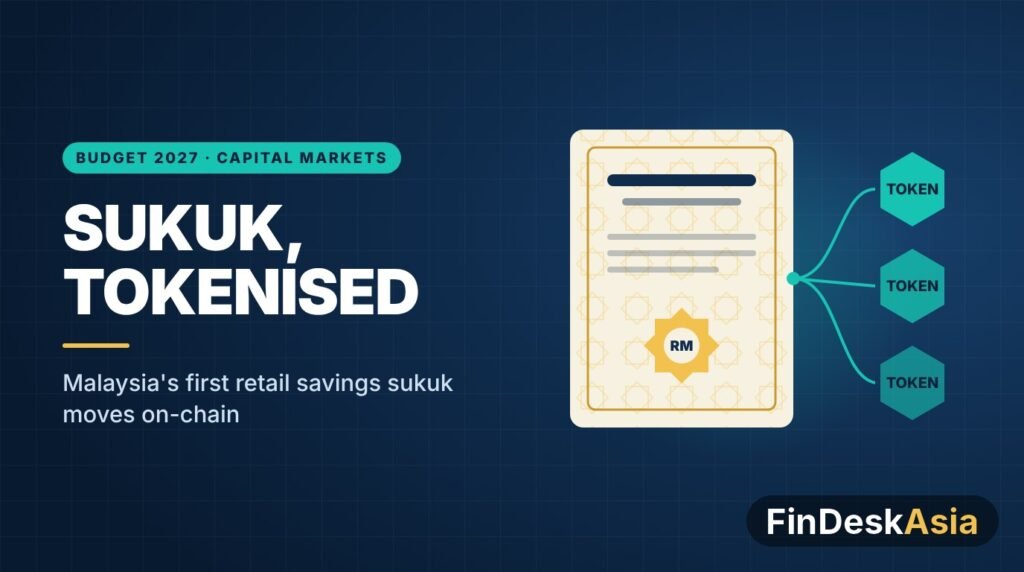
Malaysia Tokenises Retail Government Sukuk in Budget 2027 Push
During the tabling of Budget 2027 in October 2026, Prime Minister and Minister of Finance YAB Dato’ Seri Anwar Ibrahim announced the introduction of Malaysia’s first Tokenised Retail Savings Sukuk. This initiative represents a significant step forward in integrating blockchain technology into Malaysia’s Islamic capital market and democratizing government investment instruments for individual citizens.
Retail Accessibility via Blockchain
Unlike previous tokenised issuances that were restricted to institutional players, this new program is specifically designed for ordinary retail investors across Malaysia. By utilizing Distributed Ledger Technology (DLT) or blockchain, the government aims to issue, distribute, and manage these sukuk digitally. This approach enables much smaller minimum investment sizes—lowering the traditional barriers to entry—and reduces transaction costs compared to conventional bond markets.
Targeted Purpose-Driven Investing
A unique aspect of the new tokenised sukuk is that investors will be able to choose which public service sectors their funds support. During the budget speech, the Prime Minister highlighted options including education, healthcare, and social protection for lower-income groups. This mechanism gives Malaysians direct agency over where their savings are deployed, allowing them to fund national development priorities that align with their personal values.
The announcement builds upon foundational pilot projects conducted earlier in 2026 to test the regulatory and technical infrastructure for digital assets in Malaysia. Notably, in April 2026, Khazanah Nasional Berhad, in collaboration with the Securities Commission Malaysia (SC), priced a RM100 million digital sukuk pilot. Concurrently, banking groups like CIMB and Maybank conducted institutional tokenised settlement pilots to test digital custody, tokenised deposits, and smart contract distribution.
Why it matters
This initiative advances Malaysia’s position as a global leader in Islamic capital markets by merging Shariah-compliant financing with modern fintech capabilities. The use of smart contracts on a blockchain can automate profit payouts and transparently track asset usage, adding a new layer of auditability crucial for strict Shariah compliance.
For the retail investor, the Tokenised Retail Savings Sukuk modernizes the concept of national savings bonds. It transforms a historically opaque, paper-heavy process into an accessible, digital-first experience, likely managed through mobile wallets or banking apps. By directly connecting retail capital to specific public infrastructure projects, the government is not only digitizing its debt issuance but also fostering a stronger sense of civic participation among citizens. The operational framework, including launch dates and the specific digital platforms to be used, is expected to be detailed soon by the Ministry of Finance and the Securities Commission.
Internal links: How Malaysia’s Payment System Works · Payment Gateways in Malaysia.
Sources: Ministry of Finance, FintechNews Malaysia, The Star (October 2026).
