
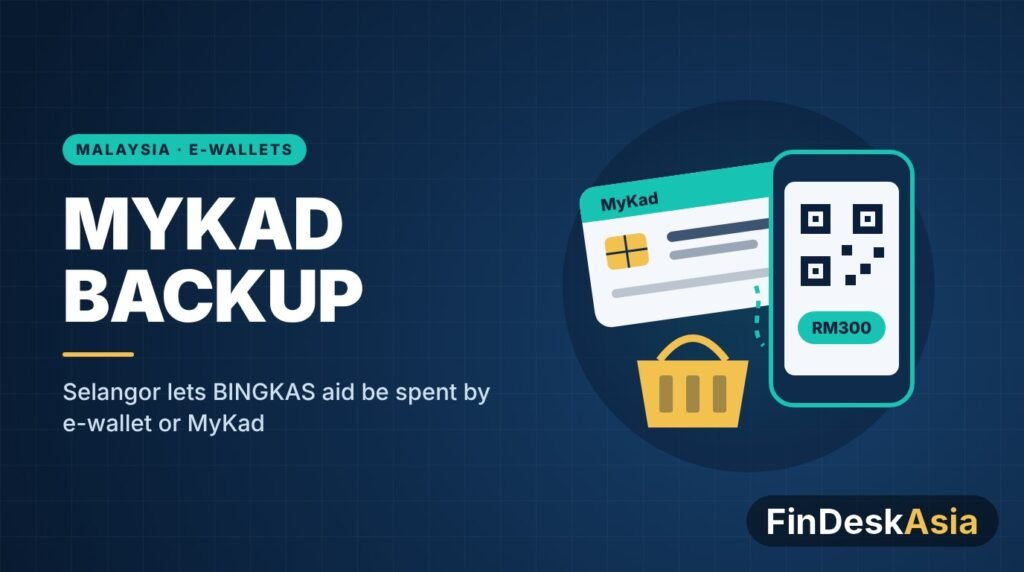
Selangor Lets BINGKAS Aid Be Spent With MyKad as E-Wallet Backup, Sets RM100m for 2027
Selangor will let recipients of its BINGKAS cost-of-living aid pay with their MyKad identity card as well as an e-wallet, as the state sets aside RM100 million to keep the programme running in 2027. The card option is meant as a backup when internet connections or the e-wallet system fail, and it follows the same model as the federal government’s SARA aid.
Key facts
- RM100 million is allocated for BINGKAS (Bantuan Kehidupan Sejahtera Selangor) in 2027, targeting 30,000 families, Menteri Besar Amirudin Shari said when tabling the Selangor Budget 2027.
- Families with at least two children under 18 receive RM300 a month for 12 months; a new category pays RM150 a month to caregivers of elderly people, persons with disabilities and bedridden patients.
- Recipients can now spend the aid with their MyKad at selected shops, alongside the existing e-wallet, which stays in use.
- Applications for the family category opened on 10 November through the state’s SELANGKAH app; registration for the caregiver category is due to start in January 2027.
How the aid is paid
BINGKAS is not handed out as cash. Each month the money is credited as digital credit to a BINGKAS e-wallet inside SELANGKAH, the Selangor government’s app. Recipients spend it at registered panel shops across the state by showing a QR code in the app and entering a six-digit PIN. The credit can only be used for set items such as staple food, fresh produce, dairy, daily essentials, some medicines and school supplies, and any amount left unused at the end of the month does not carry over.
The new MyKad option works differently. State executive councillor Anfaal Saari said it uses the same approach as Sumbangan Asas Rahmah (SARA), the federal aid that recipients spend by presenting their MyKad at participating stores. Because the card is linked to the recipient’s entitlement, there is no need for a phone, mobile data or a working app at the till. Transactions are still recorded, so recipients can check their remaining balance and track what they have spent. Media Selangor reported that the card will be phased in as a transaction medium to make the aid easier to reach and reduce reliance on e-wallet transactions.
What it means for Malaysians
- For recipients: households without a reliable smartphone or data plan, or older caregivers less comfortable with apps, get a simpler way to use their aid. If the e-wallet goes down, they can still buy groceries.
- For shops and SMEs: panel merchants may need to support both the app’s QR and PIN flow and MyKad redemption. The MyKad route only works at selected partner shops, so merchants that want BINGKAS customers will watch which outlets are added.
- For the wider payments scene: it is another sign that Malaysian aid schemes are moving from cash to tightly controlled digital credit, using either e-wallets or the national ID card as the payment tool. That keeps spending on essentials and gives the government a clear record of where the money goes.
Eligibility for the family category is limited to Malaysian citizens who are registered Selangor voters, with household income of RM5,000 a month or less and at least two children under 18. The two-children rule was first introduced under BINGKAS 2.0 in July 2024. Official details are published at bingkasselangor.com.
What to watch
- How quickly MyKad redemption rolls out, and how many panel shops can accept it.
- Whether more state and federal aid schemes standardise on MyKad as an offline backup to e-wallets.
- Take-up of the new RM150 caregiver category once registration opens in January 2027.
Related on FinDeskAsia: Malaysia’s e-wallet war explained and How Malaysia’s payment system works.
Sources: Media Selangor (November 2026); Media Selangor via Newswav (November 2026); Malaysian Review (November 2026); BusinessToday (November 2026).
