
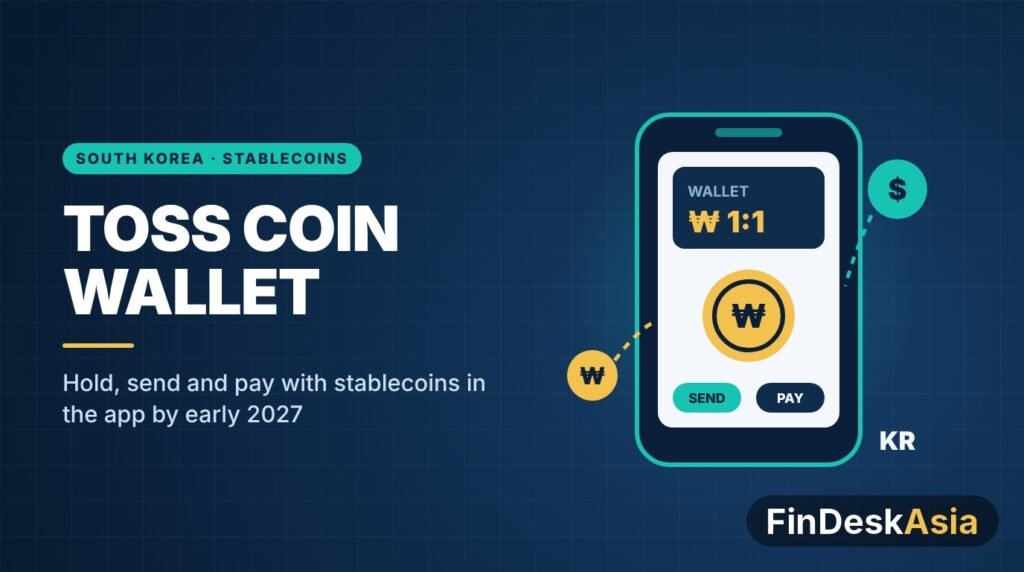
South Korea: Toss Builds Stablecoin Wallet and Payments, Aims for Early 2027
Toss, South Korea’s biggest finance super app, says it is building its own system to hold, send and spend stablecoins, and wants the service largely finished inside the company by early 2027. The plan was outlined at a policy seminar in Seoul on 10 November, while lawmakers are still drafting the rules that will decide what firms like Toss can actually launch.
Key facts
- Viva Republica, the company behind the Toss app, has set up an internal technical team to build a stablecoin wallet and payment infrastructure.
- Managing director Seo Chang-hoon said the aim is to have the service mostly complete internally by early 2027.
- Seo said Toss is interested in issuing stablecoins, but its core business is distribution: getting coins into users’ hands and making them usable.
- Toss is hiring a blockchain platform product lead to run the custody and deposit-and-withdrawal system, according to the Seoul Economic Daily.
- In July 2026, Toss and its sister lender Toss Bank signed a memorandum of understanding with Circle, issuer of the USDC dollar stablecoin, to explore wallets and payment, remittance and settlement links.
What Toss is building
A stablecoin is a digital token designed to hold a steady value, usually by being backed one-for-one with cash or short-term government bonds in a currency such as the US dollar or the Korean won. Toss wants to be the place where ordinary users keep and use those tokens.
According to Korean media reports, the system will let users hold stablecoins inside the Toss app and send them to contacts or pay with them when needed. Toss plans to turn it into a common platform that plugs digital-asset transfers and payments into its other services, including Toss Bank, Toss Securities and its shopping business.
The company is also working through the less glamorous details that any payment system needs: what happens when coins are sent to the wrong address, how to handle payments that are put on hold, how refunds and settlement adjustments work after a purchase, and which tokens to support and under what conditions users can withdraw them.
Seo also described longer-term ideas. One is an AI agent that, on a user’s instruction, splits a salary between investments, savings and travel, or pays monthly rent automatically. Another is micropayments, very small payments that are hard to make economically on today’s card and bank rails. A Toss official said the firm is still at the stage of building the technical stability and operating skills needed for a live financial environment.
Why it matters
Korea is still working out how to regulate won-backed stablecoins. Its second-phase crypto law, known as the Digital Asset Basic Act, is meant to cover issuance, distribution, disclosure and licensing, but specific rules for stablecoin services are not yet in force. Seo said that makes it unclear “what we can do and how far we can go”, so for now Toss is focusing on general-purpose technology and won-based payments and settlement, and will tailor products once the law is passed.
One of the biggest open questions is who may issue. Proposals discussed in Seoul would have banks hold more than half of any issuing consortium, a “50% plus one share” model. At the same seminar, a business school professor questioned whether banks alone should issue, while a Kim & Chang lawyer argued that anti-money-laundering duties during circulation, not just issuance, are the biggest unresolved issue. Shinhan Card said it would start by letting users pay through its existing card network.
By betting on distribution rather than issuance, Toss is positioning itself to benefit whichever way the issuer debate goes. With a large user base already doing banking, investing and payments in one app, it could become a key channel for won stablecoins, and for dollar coins such as USDC, if regulators allow it.
For the region, Korea joins Japan, Hong Kong and Singapore in moving from stablecoin talk to real infrastructure. Super apps that control the wallet and the checkout may end up shaping how these tokens are used day to day, much as e-wallets shaped QR payments across Southeast Asia.
What to watch
- When the National Assembly passes the stablecoin rules, and whether issuance stays bank-led or opens to fintechs.
- Whether Toss decides to issue its own won stablecoin, or sticks to wallets and payments for coins issued by others.
- How Toss’s work with Circle develops, and whether rivals such as KakaoBank and Naver move at the same pace.
Related on FinDeskAsia: KakaoBank and Toss Bank prepare Apple Pay and Taiwan’s draft stablecoin rules keep issuance with banks.
Sources: Bloomingbit (November 2026), Seoul Economic Daily (November 2026), Wolyo News (November 2026), The Financial News (November 2026).
