
Cambodia: Bakong to Link With Rwanda for Remittances, Adds Virtual Visa and Mastercard Cards
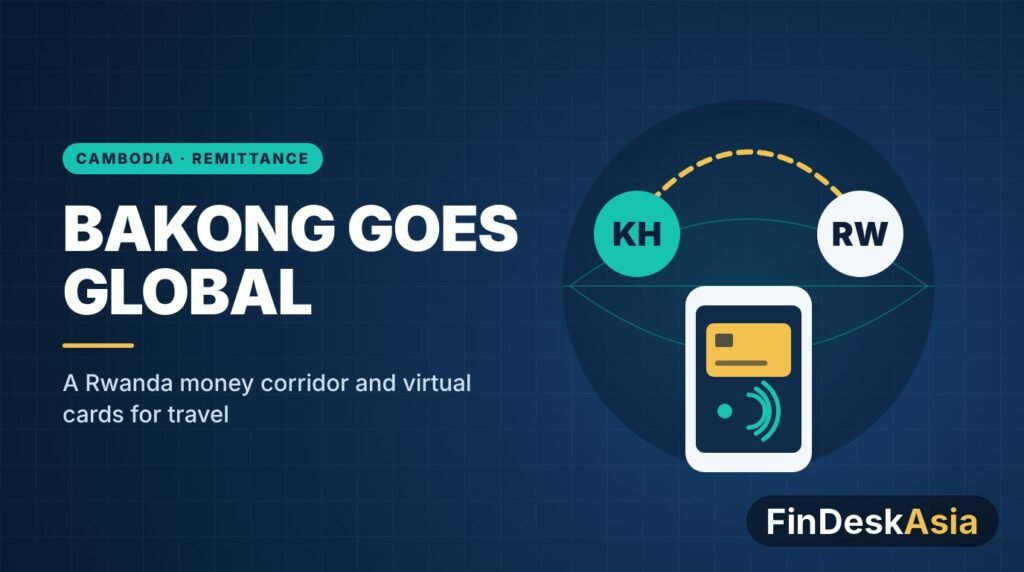
Cambodia wants its national payment system, Bakong, to work well beyond its borders. At a central-bank summit in Phnom Penh this weekend, the National Bank of Cambodia (NBC) said it is connecting Bakong with Rwanda’s national payment network so people can send money from Cambodia to Rwanda, and that Bakong users will soon be able to make virtual Visa or Mastercard cards for paying abroad.
Together, the moves show a small economy trying to turn a home-grown domestic system into an international one, with links running to Africa as well as across Asia.
Key facts
- The NBC and the National Bank of Rwanda are linking Bakong with Rwanda’s RSwitch infrastructure, which runs the eKash instant payment platform. The first use case is remittances from Cambodia to Rwanda.
- The link was unveiled at the first Black Swan Summit Cambodia, co-hosted by the NBC and the Global Finance & Technology Network (GFTN) alongside the Sommet de la Francophonie.
- Bakong users will be able to create virtual Visa or Mastercard cards inside the app for contactless payments overseas.
- Bakong connects about 38 million accounts in a country of roughly 17 million people, and handled 1.3 billion transactions worth US$241.84 billion in 2025.
- The Cambodian riel’s share of Bakong transactions rose to 58% in 2025, from 17% in 2020.
What Bakong is, and what changes
Bakong is Cambodia’s central-bank-run payment backbone. Launched by the NBC, it lets people move money instantly between banks, microfinance institutions and e-wallets, and pay shops by scanning a KHQR code, Cambodia’s national QR standard. It works in both riel and US dollars, which matters in an economy where dollars are still widely used.
Until now, most of Bakong’s international reach has come through QR links with neighbouring countries, letting travellers scan and pay. The Rwanda project is different: it is a money-transfer corridor between two countries on different continents. ITWeb Africa reports that it starts as a proof of concept, supported by ACLEDA Bank on the Cambodian side and I&M Bank Rwanda, and is pitched as a cheaper and faster alternative to traditional international payment networks.
NBC Governor Chea Serey also said the central bank wants to explore payment links with other systems in French-speaking Africa, starting with remittances and small-value trade. The two central banks first announced cross-border payment cooperation in May, so this weekend’s step moves the plan towards a working service.
The virtual card feature targets a different problem. Many Cambodians do not carry a physical international card. A card created inside Bakong would let them tap to pay at overseas shops that accept Visa or Mastercard, even where no QR link exists.
Why it matters
For Cambodia, the push supports a long-running goal: wider use of the riel and less reliance on cash and the US dollar. The jump in the riel’s share of Bakong payments, from 17% to 58% in five years, is the main evidence that the system is changing habits at home. Connecting it abroad is the next test.
For the region, the Rwanda link is an unusual example of an Asian instant payment system plugging directly into an African one, rather than routing through correspondent banks. Most of Asia’s payment links so far, such as the QR connections between ASEAN neighbours, have stayed within the region. If the Cambodia–Rwanda corridor works, it could become a model for other emerging markets that want direct links with trading partners further away.
The summit also continued Cambodia’s tie-up with Japan’s SBI Group on stablecoin transfers and tokenised government bonds, which FinDeskAsia covered separately.
What to watch
- A launch date, fees and transfer limits for the Cambodia-to-Rwanda remittance service, and whether transfers will later flow in both directions.
- Which banks and wallets will offer the virtual Visa and Mastercard cards inside Bakong, and when.
- Whether the NBC names its first French-speaking African partner beyond Rwanda.
Related on FinDeskAsia: ASEAN cross-border QR payments · How a national payment system works
Sources: Fintech News Singapore (Nov 2026) · NBC and GFTN via PR Newswire / The Manila Times (Nov 2026) · ITWeb Africa (Nov 2026) · AKP (May 2026)
